
CRi ALOUD CASE FILES
The Secret
They told him, “What happens here stays here.”
What are you being asked to hide?

The complete story
Seven frames. One question.
Swipe or use the arrows to explore.

They told him, “What happens here stays here.” The real question is: what are you being asked to hide?

Personal information. Sensitive conversations. Legitimate confidences. Not everything belongs in public.

A name? A promise? A mistake? Or something harmful?
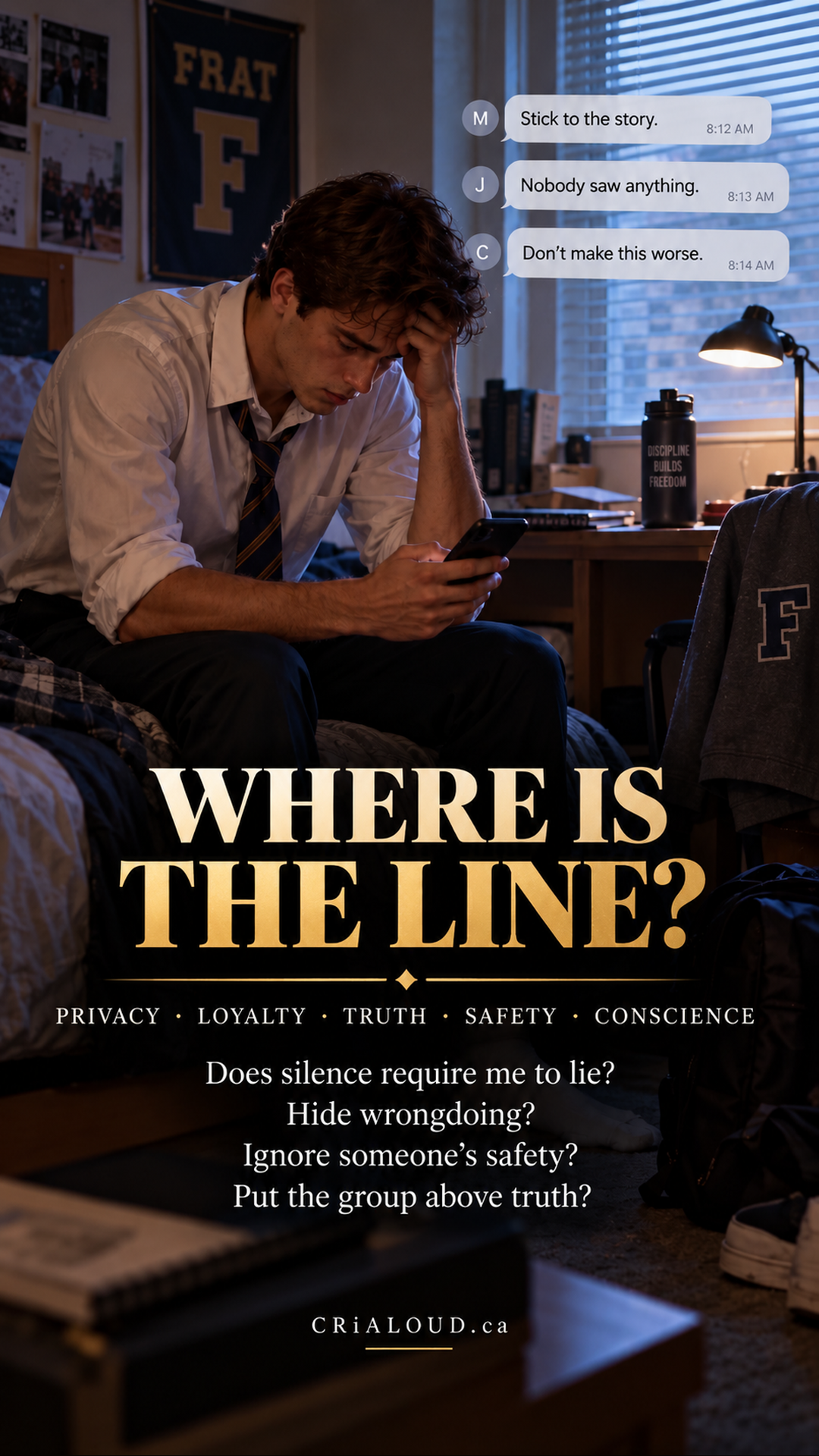
Does silence require me to lie, hide wrongdoing, ignore someone’s safety, or put the group above truth?

Wherefore putting away lying, speak every man truth with his neighbour: for we are members one of another. Ephesians 4:25 KJV.
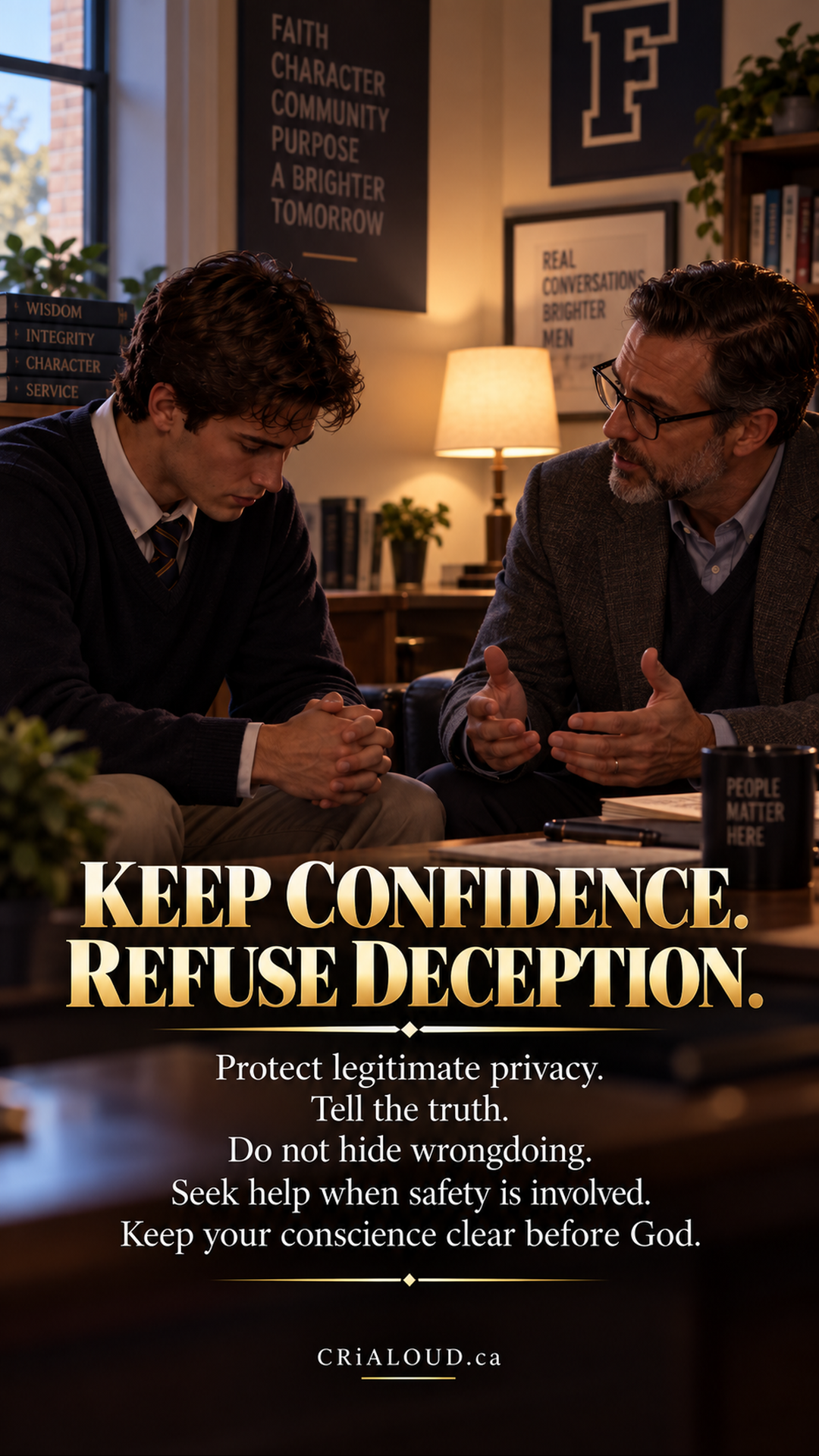
Protect legitimate privacy. Tell the truth. Do not hide wrongdoing. Seek help when safety is involved.

Understand what is private. Ask why. Compare it with Scripture. Choose faithfully. Next: The Loyalty Test.
Frame 1 of 7
Quick orientation
Privacy is not automatically wrong.
Privacy can protect dignity and trust. Secrecy becomes a moral problem when silence requires deception, conceals wrongdoing, ignores safety, or places group loyalty above truth and conscience. This Case File examines that line without teaching that every private matter is sinful.
A CRi ALOUD Case File
When Does Privacy Become Deception?
Privacy is not automatically wrong. The moral concern arises when secrecy requires deception, conceals wrongdoing, ignores safety, or places loyalty above truth and conscience.
1. Privacy Is Not Automatically Wrong
Privacy can protect dignity, safety, trust, and healthy personal boundaries. Not every conversation, personal detail, or entrusted confidence belongs in public.
The biblical question is not whether information is private. The question is what is being kept private, why it is being withheld, and what faithfulness requires.
2. What Exactly Must Stay Secret?
Establish the facts before reaching a moral conclusion. What information is involved? Who asked for secrecy? Why? For how long? Who could be affected?
Ask whether silence would require a false statement, conceal wrongdoing, prevent appropriate reporting, or place another person in danger.
3. Confidentiality vs Concealment
Confidentiality can protect information entrusted for a legitimate purpose. Concealment crosses a moral line when it depends on deception, obstructs accountability, or hides conduct that harms others.
The same word—secret—can describe very different duties. Examine the function, not merely the label.
4. Loyalty, Reputation and Conscience
Loyalty can be good, but it is not absolute. Protecting a group’s reputation does not justify lying or silencing a truthful concern.
A Christian’s loyalty to any group remains accountable to God, Scripture, truth, neighbour-love, safety, and a clear conscience.
5. When Silence Protects Wrongdoing
The police and reporting scene in this Case File is fictional and illustrative. It does not document a real organization, fraternity, or incident.
When abuse, coercion, threats, criminal conduct, or immediate danger may be involved, seek appropriate safeguarding, emergency, legal, institutional, or other qualified help. Do not promise secrecy that would require deception or prevent needed protection.
6. Scripture: Speak Truth
“Wherefore putting away lying, speak every man truth with his neighbour: for we are members one of another.”
Ephesians 4:25 KJV
Truthfulness does not require broadcasting every private detail. It does require refusing deception and speaking truth when silence would make us participants in a lie or leave wrongdoing unaddressed.
7. Faithful Discretion
“A talebearer revealeth secrets: but he that is of a faithful spirit concealeth the matter.”
Proverbs 11:13 KJV
Faithful discretion protects legitimate confidence. Biblical discretion and biblical truthfulness belong together: keep confidence where it is right to do so, and refuse concealment that serves deception or harm.
8. Seven Questions to Ask About a Secret
1. What exactly am I being asked not to disclose?
2. Why is confidentiality being requested?
3. Would keeping silent require me to lie or mislead?
4. Could silence conceal wrongdoing or ignore someone’s safety?
5. Is loyalty to the group being placed above truth or conscience?
6. Who is appropriately qualified to help me examine or report this?
7. Can I keep this secret before God with a clear conscience?
9. What Not to Assume
Do not assume that every private request is abusive, every organization handles secrecy in the same way, every withheld detail is a lie, or every allegation proves a fact.
Do not treat rumor, fear, or visual symbolism as evidence. Distinguish what you observed, what another person claimed, what reliable sources establish, and what remains unresolved.
10. If Your Conscience Is Troubled
Write down the actual words, requests, events, and evidence as accurately as possible. Separate observation from interpretation. Seek mature Christian counsel and, where appropriate, qualified safeguarding, legal, medical, mental-health, institutional, or emergency help.
Do not destroy evidence, confront a dangerous situation alone, or let pressure force an immediate promise. Respond to what is true, protect safety, and keep a clear conscience before God.
Continue studying
Verified live resources
Next in the story
The Loyalty Test
No public Loyalty Test route is exposed until that Case File is released.
EXPLORE CASE FILES