CRi ALOUD CASE FILES
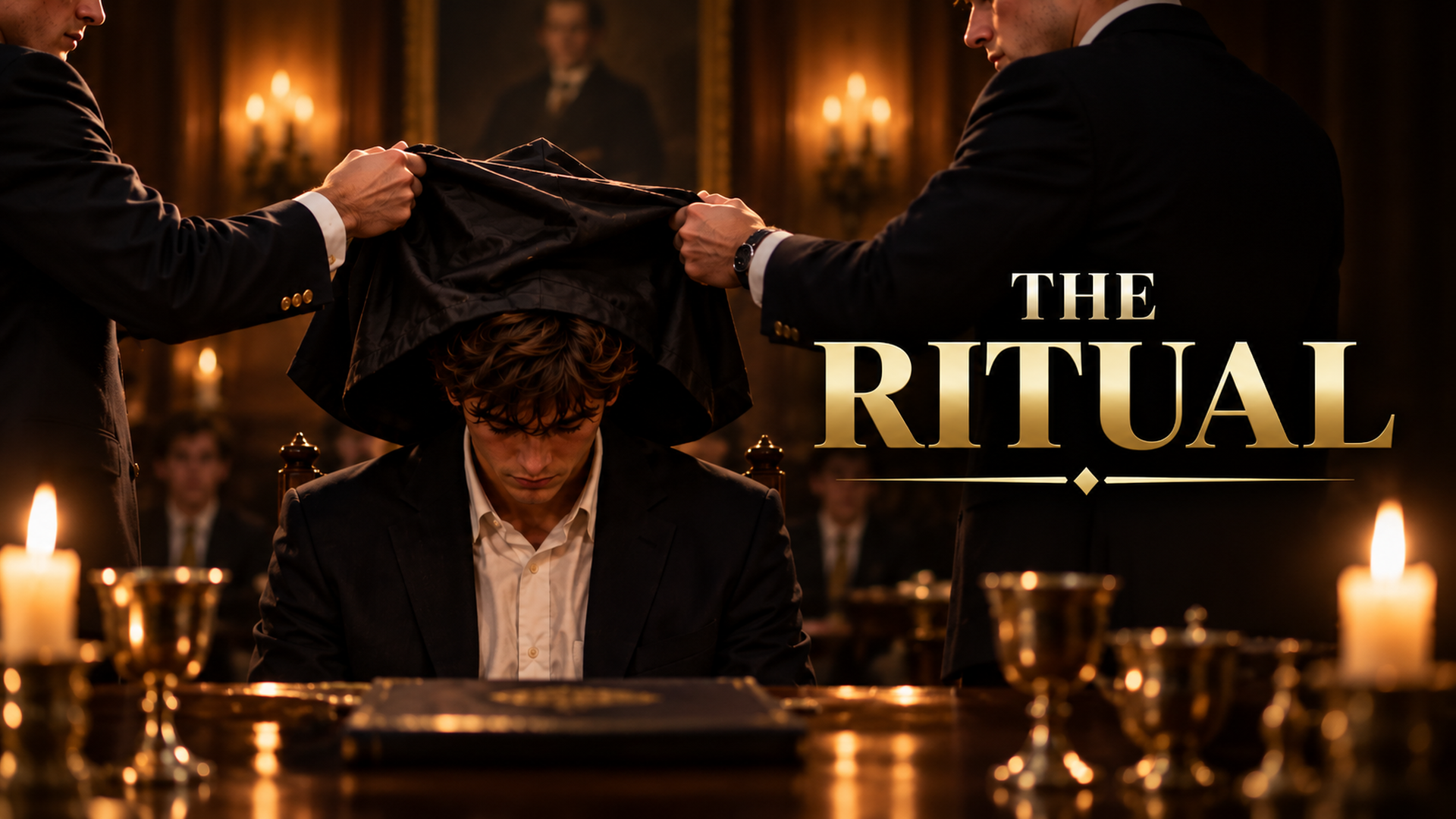
The Ritual
They said it was only tradition.
What does the ceremony actually mean?
The complete story
Seven frames. One question.
Swipe or use the arrows to explore.
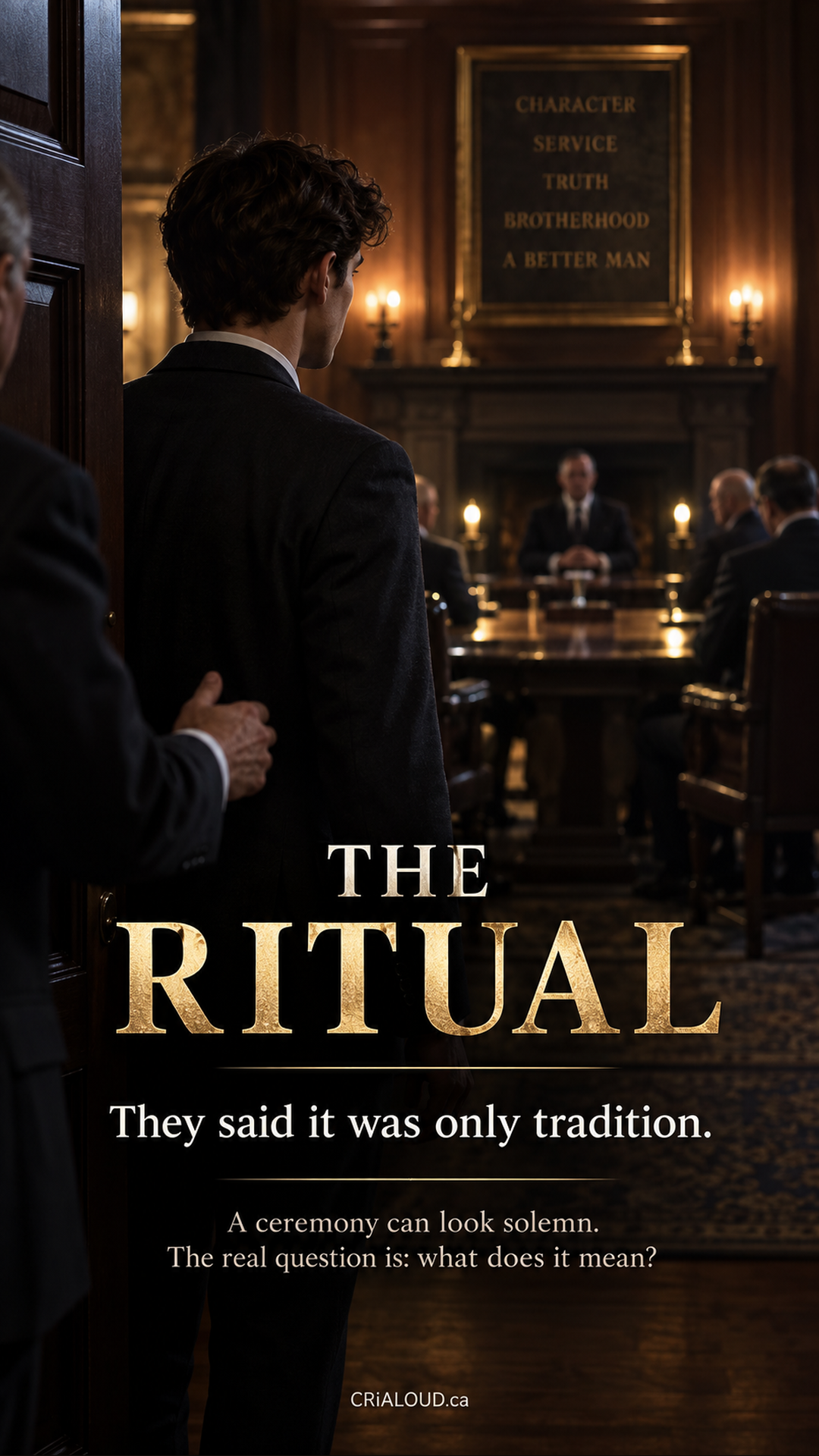
They said it was only tradition.
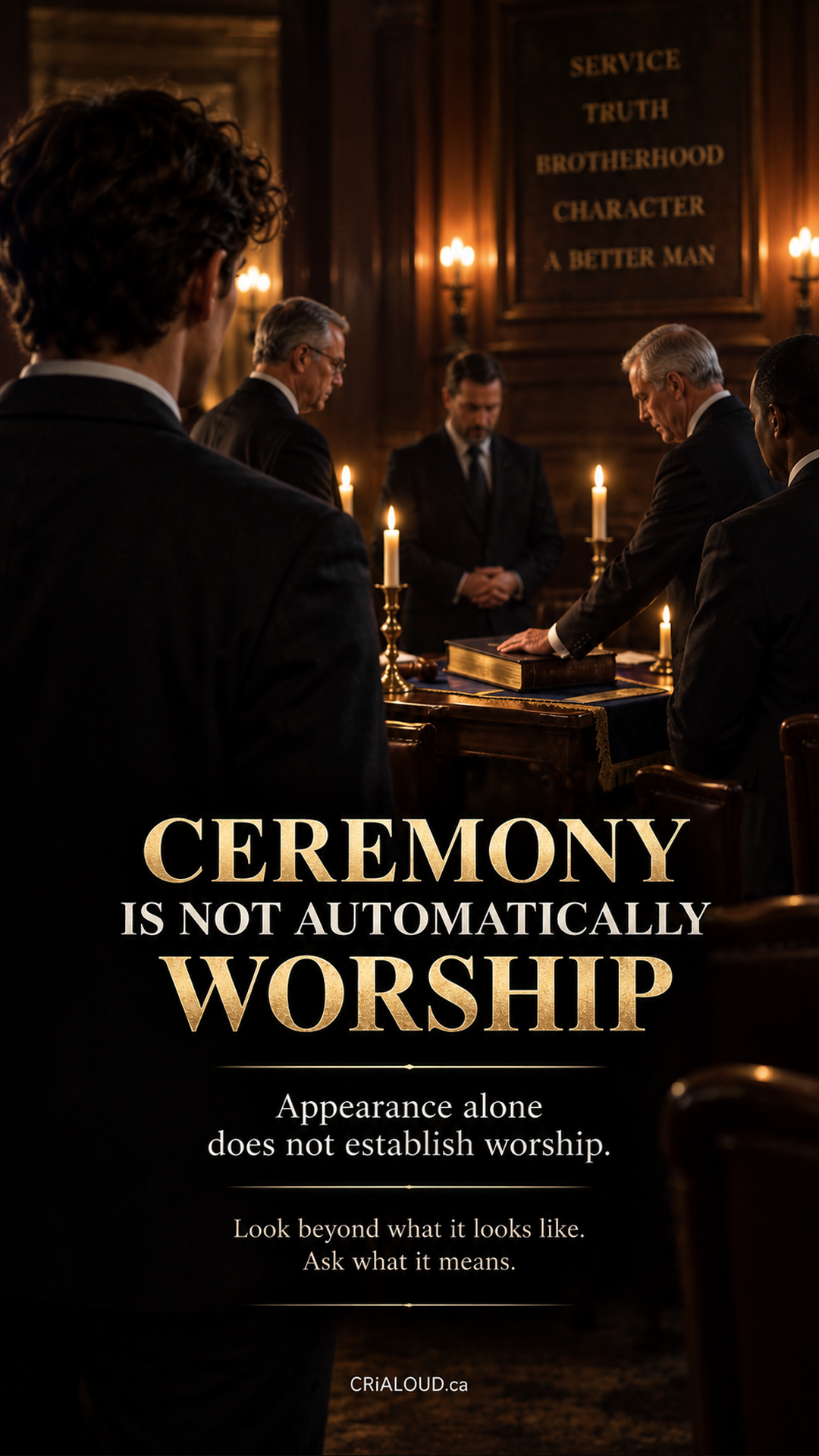
Formal and symbolic actions are not enough by themselves to establish worship.
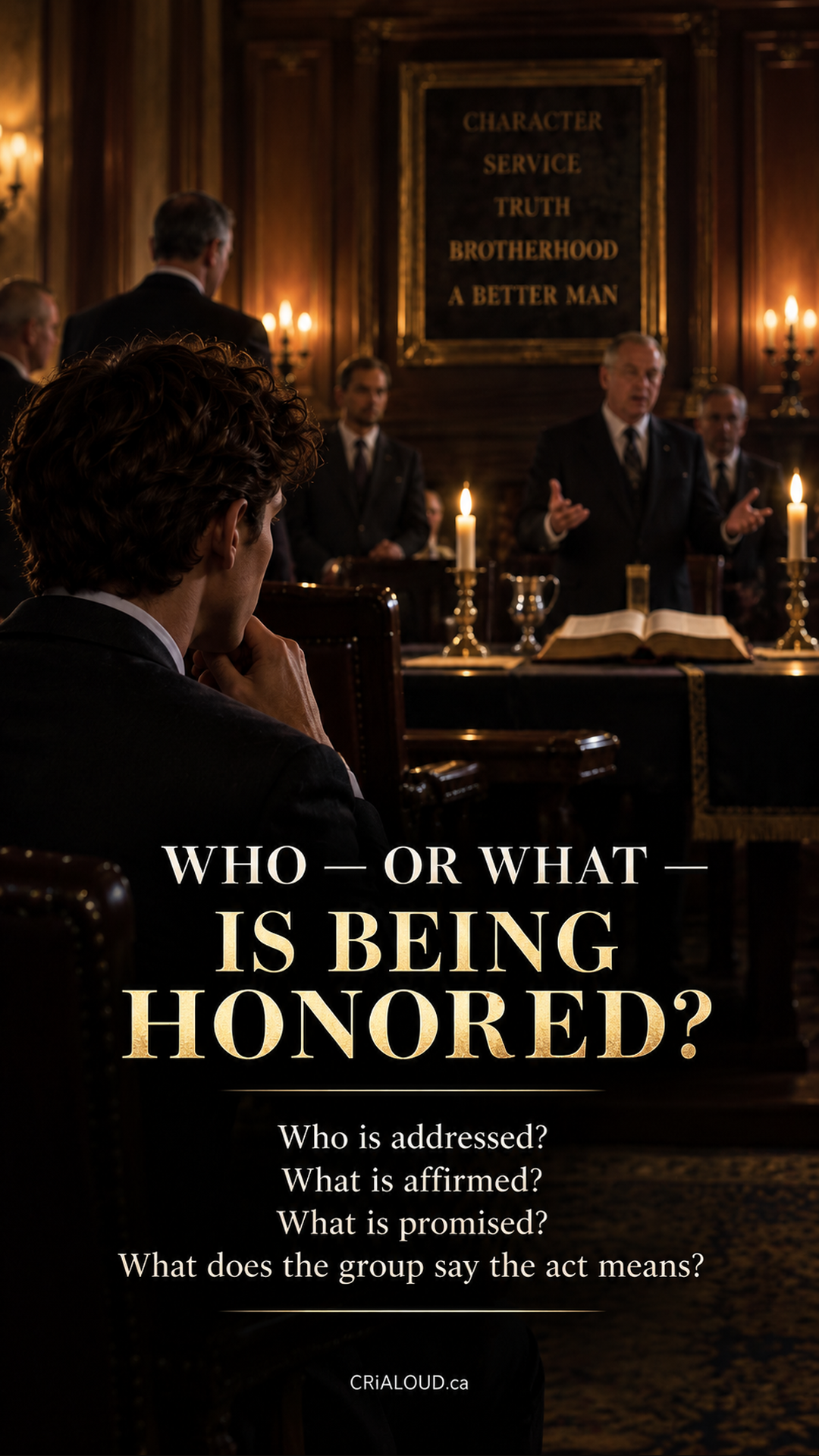
Establish who or what the ceremony addresses, invokes, or honors.
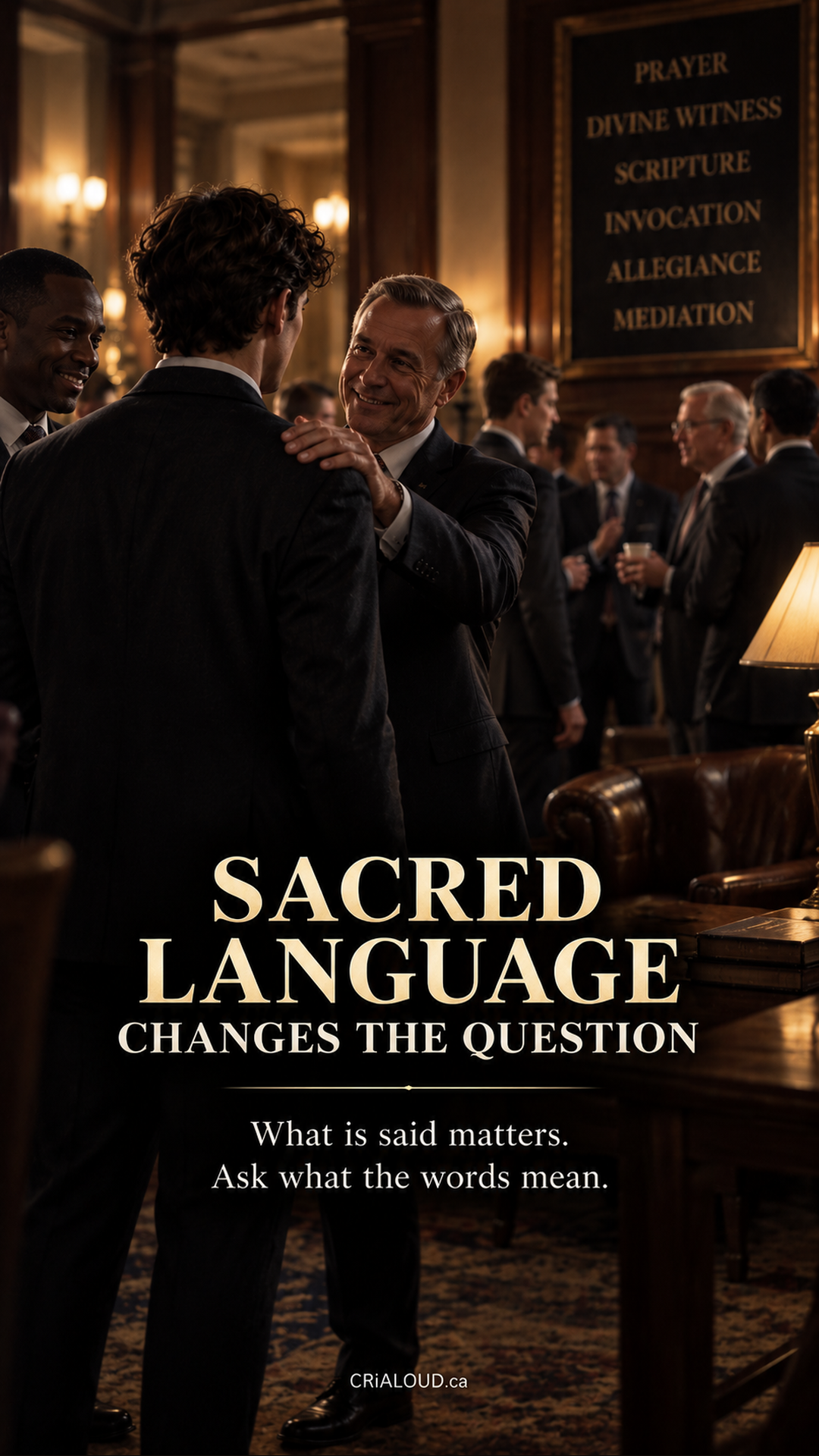
Examine prayer, invocation, divine names, sacred texts, and spiritual claims carefully.
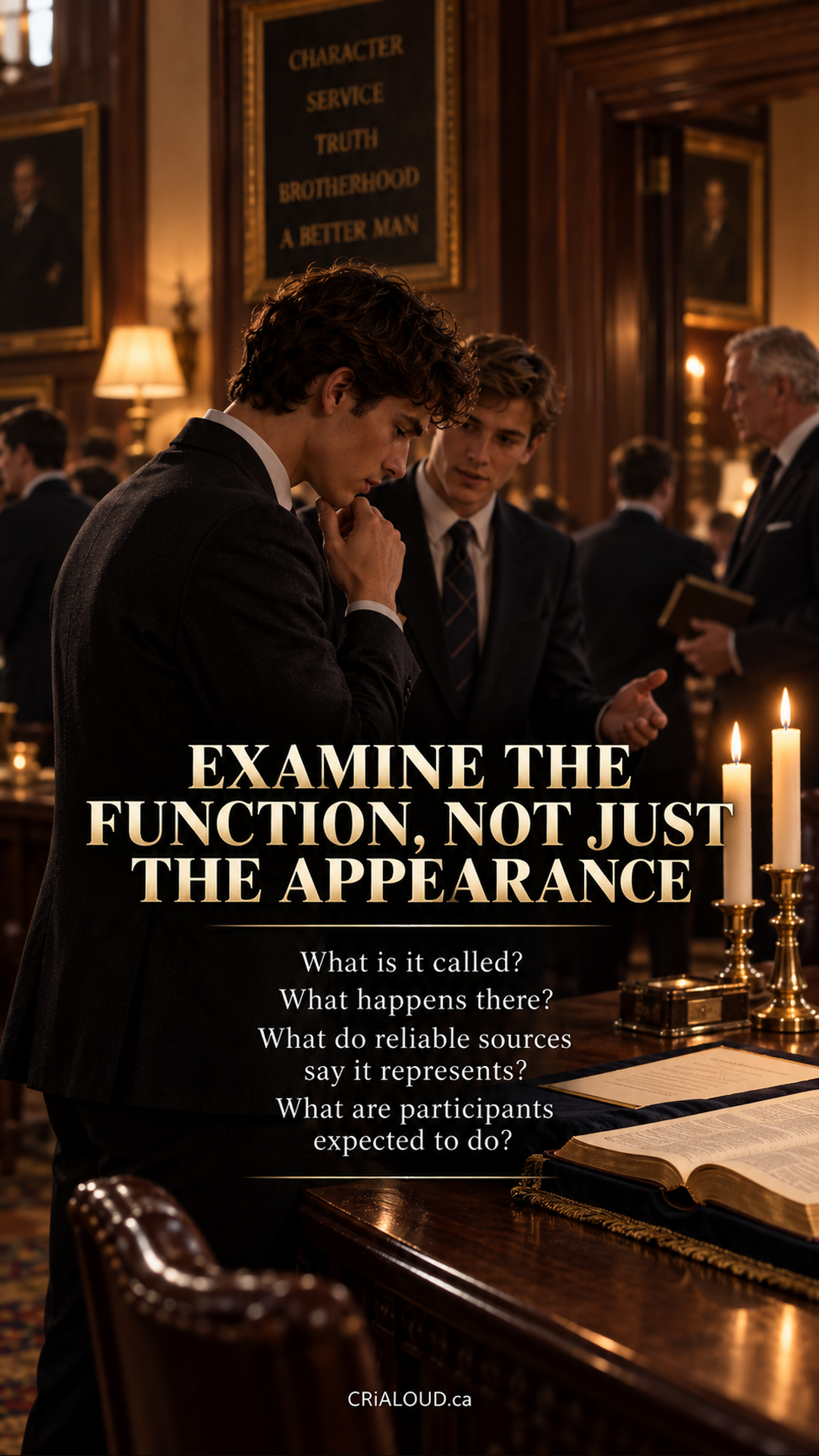
Test what the act and its objects do, not merely how they look.
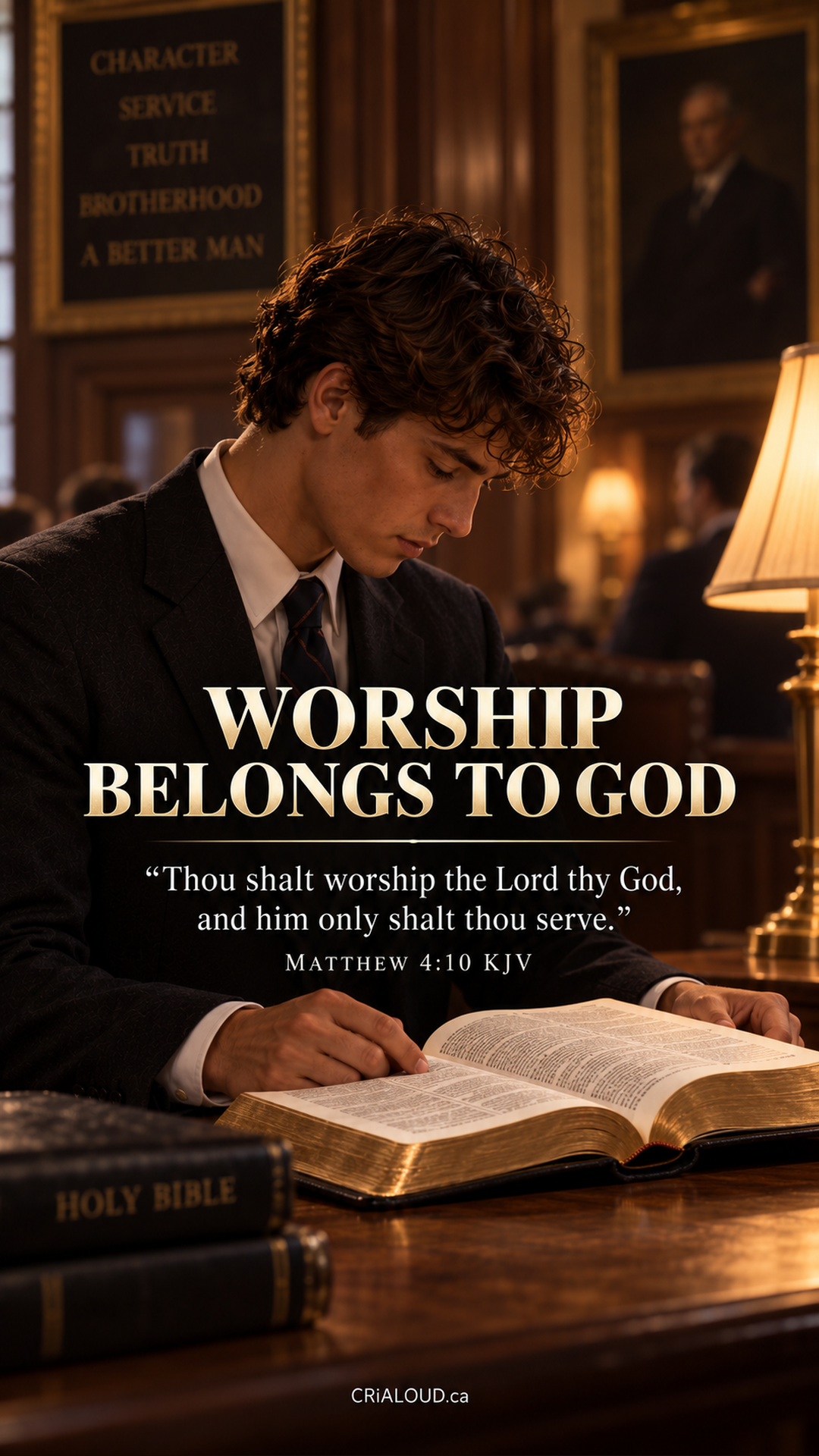
Thou shalt worship the Lord thy God, and him only shalt thou serve. Matthew 4:10 KJV.
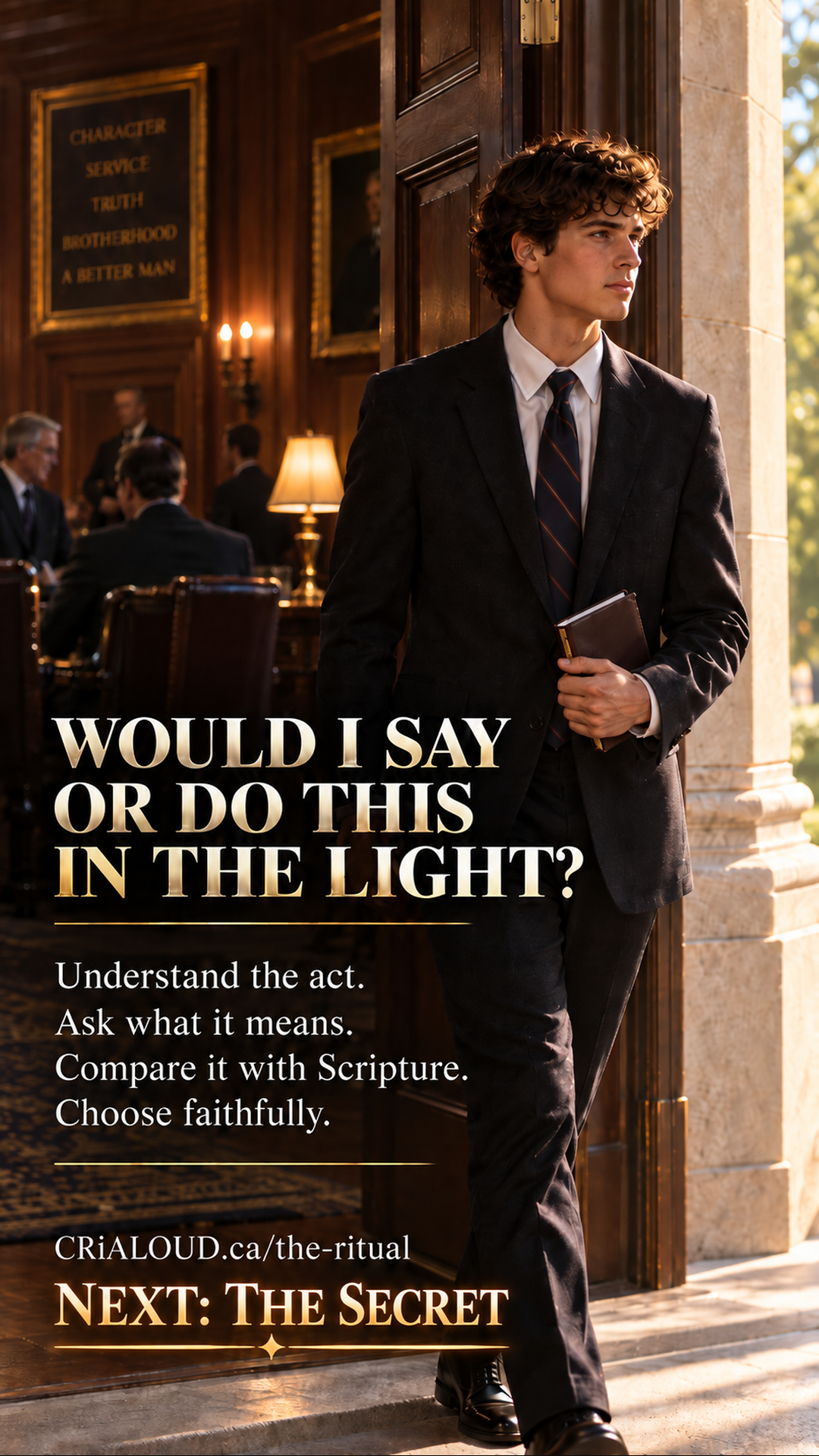
Continue at CRiALOUD.ca/the-ritual. Next: The Secret.
Frame 1 of 7
Quick orientation
Examine the ceremony itself.
A formal ceremony may be social, moral, symbolic, organizational, legal, or religious. This Case File does not decide what a ritual means by appearance alone. It asks what the act does, what participants are told it means, who or what is addressed or honored, and whether anything conflicts with Scripture.
A CRi ALOUD Case File
What Does the Ceremony Actually Mean?
A ceremony can be meaningful without being worship. Establish the act and its meaning before reaching a conclusion.
INTRODUCTION
A ceremony can be meaningful without being worship.
Graduations, weddings, courtrooms, military events, churches, civic organizations, clubs, fraternities, sororities, and families all use formal words, symbolic actions, special clothing, meaningful objects, and prescribed order.
The biblical question is not simply:
“Does this look mysterious?”
The better question is:
“What does this act mean, what am I being asked to do, and does any part of it conflict with my allegiance to God through Jesus Christ?”
ESTABLISH THE ACT → ESTABLISH ITS MEANING → TEST IT BY SCRIPTURE → RESPOND ONLY TO WHAT IS TRUE.
1. Ceremony Is Not Automatically Worship
A solemn room can feel religious.
Participants may stand in a certain place. Words may be repeated. Candles may be lit. A Bible or other sacred text may be present. A table or altar may become the focus. A participant may kneel, raise a hand, walk a path, or repeat a promise.
But formal and symbolic actions are not enough by themselves to establish worship.
Before reaching a conclusion, establish:
what the organization calls the act;
what participants are told it means;
who or what is being honored;
what words are spoken;
whether prayer, invocation, sacred text, or divine witness is involved;
whether the act creates a promise, allegiance, or continuing obligation;
whether participation is optional, required, temporary, or continuing.
2. Sacred Language Changes the Question
When a ceremony uses religious language, the examination becomes more specific.
Ask:
Is God addressed?
Is the language presented as prayer?
Is a divine name used as witness to a promise?
Is Scripture quoted, interpreted, or applied?
Is another spiritual being, force, principle, ancestor, or power addressed or honored?
Am I being asked to affirm a spiritual truth?
Is the act described as symbolic morality, religious devotion, or spiritual formation?
Bible words do not automatically make a ceremony biblical. The issue is the context in which the words are used and the meaning assigned to them.
3. Invocations and Prayer
Prayer is not merely decorative language. It can express dependence, worship, petition, thanksgiving, confession, or communion.
If a ritual includes prayer or invocation, ask:
Who is being addressed?
Is a mediator named or implied?
What is being requested?
Am I expected to affirm words I do not believe?
Is the prayer consistent with Christian confession of God and Jesus Christ?
A Christian should not repeat spiritual language carelessly simply because everyone else is doing it.
4. Altars, Tables, Bibles, Candles and Sacred Objects
The function of an object matters more than its appearance.
A table is not automatically an altar.
An altar-like table is not automatically an idol.
The presence of a Bible does not prove that a ceremony is Christian.
Candles do not prove that a ceremony is occult.
Ask:
What is the object called?
What takes place around it?
How is it represented in reliable or official material?
Are participants told to touch, salute, kneel, swear, pray, or make an offering before it?
Is it a practical focal point, a moral symbol, or an object with religious meaning?
Evidence comes before interpretation.
5. Symbols Inside Ritual
A symbol should be understood through its source, context, stated meaning, and actual use.
Do not assume that visual similarity proves identical meaning.
Use this sequence:
SOURCE → CONTEXT → STATED MEANING → ACTUAL USE → BIBLICAL REVIEW.
This Case File uses words rather than real institutional marks or occult emblems because the purpose is to teach a sound method of examination, not to manufacture guilt through imagery.
6. Scripture: Worship Belongs to God
Jesus said:
“Thou shalt worship the Lord thy God, and him only shalt thou serve.”
Matthew 4:10 KJV
A respectful gesture is not automatically worship. But a Christian cannot give ultimate devotion, religious service, or spiritual allegiance to a rival claimant.
Study also:
Exodus 20:3 KJV
1 Timothy 2:5 KJV
John 14:6 KJV
1 Thessalonians 5:21 KJV
7. Seven Questions to Ask About a Ritual
1. What actually happens?
Describe the ceremony without interpreting it first.
2. What does the organization say it means?
Use official or otherwise qualified sources where possible.
3. Who or what is being honored?
Distinguish respect, memorial, symbolism, and worship.
4. What words am I expected to say?
Do I understand and believe them?
5. Is prayer or sacred language involved?
Who is addressed, invoked, or presented as mediator?
6. Does the act create allegiance or identity?
Does it conflict with my allegiance to Christ?
7. Could I do this openly before God with a clear conscience?
If not, why not?
8. What Not to Assume
Do not assume:
every fraternity or sorority uses the same ritual;
every ritual is occult;
every candle, robe, or symbolic object has a hidden spiritual meaning;
the presence of a Bible makes the ceremony Christian;
kneeling automatically equals worship;
a blindfold automatically creates spiritual bondage;
another person’s testimony accurately describes your organization;
one leaked text is current and universal across every chapter.
9. If Scripture Convicts You
If you are considering participation, pause before making a commitment you do not understand.
If you have already participated, write down what you actually said, did, believed, affirmed, and promised. Then respond only to what the evidence and Scripture warrant.
That response may include:
no action where no conflict is established;
asking better questions;
declining participation;
repentance for actual sin;
renouncing an actual contrary allegiance or belief;
responsible withdrawal;
seeking mature Christian counsel;
repairing harm where your actions affected another person.
Do not manufacture guilt.
10. Prayer / Reflection
Father in heaven, give me wisdom and honesty as I examine what I am being asked to say, do, affirm, and join myself to. Keep me from fear, exaggeration, and careless judgment. Show me what is true. Let Your Word govern my conscience. Where something conflicts with wholehearted allegiance to You through Jesus Christ, give me courage to choose faithfully. In Jesus’ name, Amen.
Scripture + method
Worship belongs to God
ESTABLISH THE ACT → ESTABLISH ITS MEANING → TEST IT BY SCRIPTURE → RESPOND ONLY TO WHAT IS TRUE.
“Thou shalt worship the Lord thy God, and him only shalt thou serve.”
Matthew 4:10 KJV
Related study
- Exodus 20:3 KJV
- 1 Timothy 2:5 KJV
- John 14:6 KJV
- 1 Thessalonians 5:21 KJV
Continue studying
Verified live resources
Next in the story
The Secret
No public Secret route is exposed until that Case File is released.
EXPLORE CASE FILES