
CRi ALOUD CASE FILES
The Oath
What are you promising?
Before you give your word, know what you're promising.

The complete story
Seven frames. One question.
Swipe or use the arrows to explore.
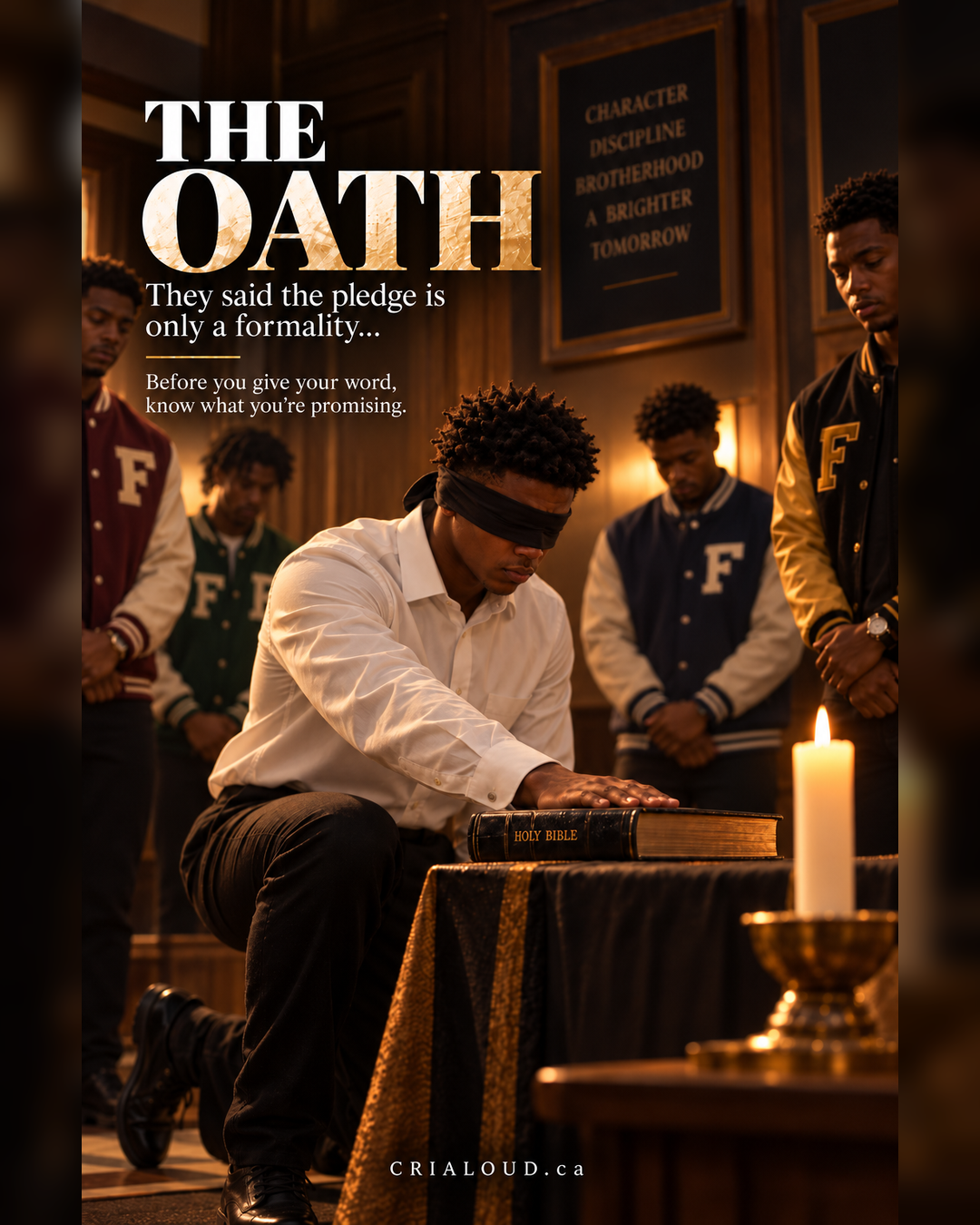
They said the pledge was only a formality. Before you give your word, know what you are promising.

Brotherhood. Opportunity. Service. A Better Future. It looks good. It sounds right. You feel like you belong.

Look beyond the invitation. Ask the right questions. Know the bigger picture.

Ideas shape people. People shape culture.

Truth does not need exaggeration. Seek the truth and make your own decision.

Do not just accept. Research, think critically, and be informed.
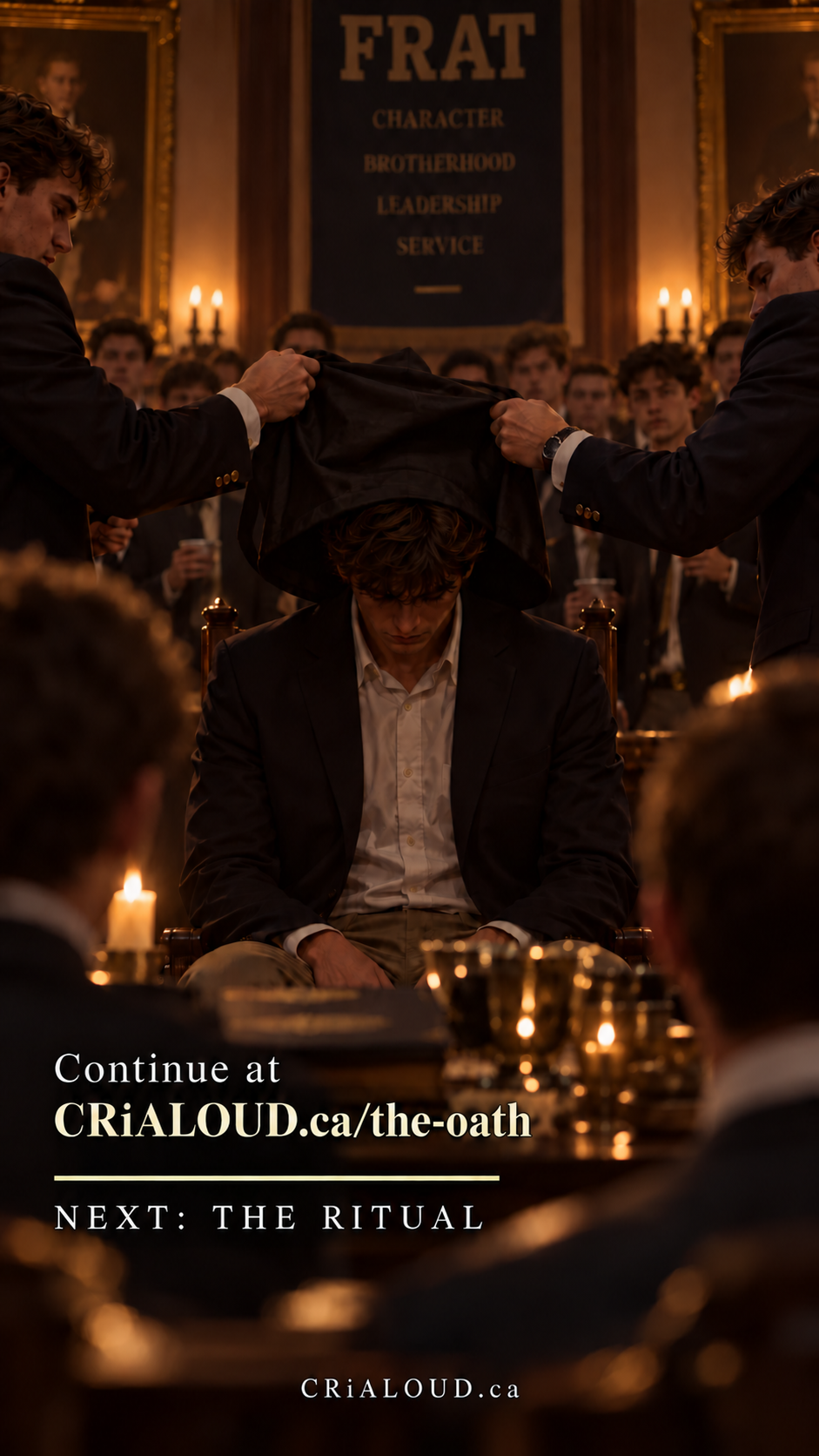
Continue at CRiALOUD.ca/the-oath. Next: The Ritual.
Frame 1 of 7
Quick orientation
Examine the promise itself.
This Case File does not assume every fraternity, sorority, lodge, or organization uses the same oath or carries the same meaning. It asks a simpler question: what are you personally being asked to promise, affirm, keep private, or remain loyal to?
A CRi ALOUD Case File
What Are You Really Promising?
Document the actual promise. Test it by Scripture. Respond only to what is true.
Maybe the invitation offers friendship, brotherhood, sisterhood, service, networking, mentoring, opportunity, legacy, or a stronger sense of belonging.
Those things can be genuinely attractive.
But before a Christian gives a word, makes a pledge, takes an oath, or accepts a continuing obligation, there is a more basic question:
What exactly am I promising?
CRi ALOUD uses a simple rule:
DOCUMENT THE ACTUAL PROMISE → TEST IT BY SCRIPTURE → RESPOND ONLY TO WHAT IS TRUE.
This Case File does not assume that every fraternity, sorority, lodge, chapter, or organization is identical. It does not teach that every private commitment is spiritually dangerous, that every ceremony is worship, or that saying words automatically creates a hidden spiritual mechanism.
The goal is simpler:
understand the commitment before you make it.
1. WHY THE INVITATION CAN FEEL SO STRONG
Belonging matters.
A student may see:
friendship;
community;
professional connections;
service;
mentoring;
academic support;
leadership;
tradition;
family legacy;
a place to fit in.
A fair examination does not deny those things.
The question is whether the actual commitments required by the organization can be kept faithfully without violating Scripture, conscience, truthfulness, or wholehearted allegiance to Jesus Christ.
2. WHAT KIND OF PROMISE IS BEING MADE?
Words such as oath, vow, pledge, affirmation, obligation, promise, covenant, commitment, and declaration are not always interchangeable.
Do not argue from labels alone.
Ask:
What exact words am I being asked to say?
What am I affirming?
Who or what is being invoked as witness?
What am I promising to keep private?
What loyalty is expected?
How long does the commitment continue?
What responsibilities remain after initiation?
What happens if my conscience later tells me the commitment is wrong?
Can I review the terms before agreeing?
If you do not know, write “uncertain” and keep researching.
3. PRIVACY IS NOT AUTOMATICALLY IMMORAL SECRECY
Every private matter is not sinful.
Families have private conversations.
Counsellors protect confidentiality.
Businesses protect legitimate information.
Churches may handle sensitive pastoral matters carefully.
The Christian question is therefore not merely:
“Is something secret?”
Ask instead:
Does the secrecy require me to lie?
Hide wrongdoing?
Protect abuse?
Mislead others?
Place institutional loyalty above conscience?
Keep me from seeking needed help?
Prevent truthful Christian witness?
Ephesians 4:25 calls believers to truthfulness.
Privacy and deception are not the same thing.
4. LOYALTY, IDENTITY, AND ALLEGIANCE
Organizations naturally develop loyalty.
The deeper question is whether that loyalty becomes incompatible with allegiance to God through Jesus Christ.
Ask:
Am I being asked to defend the organization regardless of truth?
Does membership become an identity more important than my identity in Christ?
Am I expected to obey people or rules when conscience and Scripture require otherwise?
Does the organization require religious language, sacred witness, prayer, or worship claims that conflict with my faith?
A Christian may value friendship and community while still refusing a commitment that violates conscience.
5. SACRED LANGUAGE, BIBLES, ALTARS, AND CEREMONY
A ceremony may include:
a Bible;
prayer;
an altar or central table;
candles;
formal language;
symbolic actions;
officers;
special clothing;
solemn promises.
None of these features automatically proves worship.
But their presence makes careful examination more important.
Ask:
Why is the Bible present?
What passage is being used?
What does the altar or table mean in this organization?
What is the candidate asked to affirm?
Who or what is honored?
What does the ceremony teach about truth, identity, loyalty, morality, God, or spiritual authority?
Do not overclaim from atmosphere.
Establish meaning from reliable evidence.
6. WHAT DOES SCRIPTURE SAY ABOUT GIVING YOUR WORD?
Matthew 5:37 teaches:
“But let your communication be, Yea, yea; Nay, nay: for whatsoever is more than these cometh of evil.” — KJV
James 5:12 likewise warns believers about oaths and emphasizes truthful speech.
The biblical principle is not permission to become careless with ordinary promises.
It is the opposite.
Your word should be truthful enough that you do not need theatrical language to make dishonesty credible.
Before making a solemn commitment:
understand it;
tell the truth;
protect conscience;
place allegiance to Christ first.
1 Thessalonians 5:21 says:
“Prove all things; hold fast that which is good.” — KJV
That principle fits this Case File exactly.
Examine before you commit.
7. WHAT IF I ALREADY MADE THE PROMISE?
Do not panic.
Begin with what is actually true.
Write down:
What I actually promised.
What I actually practiced.
What I am still expected to do.
What part now troubles my conscience.
What Scripture says.
What response is actually warranted.
If Scripture reveals personal sin, repent.
If you made an actual promise or accepted an allegiance that you now believe conflicts with Christ, you may need to renounce that actual commitment and leave the incompatible practice responsibly.
If you harmed someone, apology or restitution may be warranted.
If the organization requires formal resignation, seek accurate information about the process.
If legal, safety, hazing, abuse, financial, trauma, mental-health, or medical concerns are involved, obtain qualified help as appropriate.
Do not confess vows you never made.
Do not inherit someone else’s guilt.
Do not manufacture a supernatural explanation merely because you are afraid.
8. WHAT NOT TO ASSUME
Do not assume:
every organization is identical;
every member understands the ritual the same way;
every oath is occult;
every secret is evil;
every ceremony is worship;
every use of a Bible makes a ceremony Christian;
membership proves demonic activity;
a relative’s involvement creates your personal guilt;
illness, dreams, financial problems, or family conflict automatically prove a spiritual mechanism.
Truth does not need exaggeration.
9. QUESTIONS BEFORE YOU GIVE YOUR WORD
Before making a pledge, ask:
Can I read the actual commitment first?
What am I promising?
What is expected of my loyalty?
What information must remain private?
Does that secrecy ever conflict with truth or safety?
Is God, Scripture, prayer, or sacred language used?
What identity am I accepting?
What continuing duties remain?
What happens if I later withdraw?
Can I make this commitment with a clear conscience before God?
10. PRAY BEFORE YOU PROMISE
Father in heaven,
Give me wisdom and honesty.
Help me understand what I am being asked to promise.
Keep me from making a decision because of pressure, fear of rejection, status, opportunity, or the desire to belong.
Show me what is true.
Help me recognize what is genuinely good and what may conflict with Your Word.
Guard my conscience.
Give me courage to say yes where I can act faithfully and courage to say no where obedience to Christ requires it.
Let my deepest identity and allegiance remain in Jesus Christ.
In Jesus’ name,
Amen.
11. CONTINUE IN CHRIST
Discernment is not merely learning what to avoid.
Build the better alternative:
identity in Christ;
truthful friendships;
healthy Christian community;
service;
character;
mentoring;
purpose;
stewardship;
mission.
You do not need to accept every invitation in order to have a meaningful future.
12. CONTINUE THE CASE FILE
Continue:
CRiALOUD.ca/the-oath
Related:
Fraternities & Sororities — What Should a Christian Examine?
Freemasonry — What Should a Christian Examine?
Identity Before Warfare
NEXT CASE FILE:
THE RITUAL
Scripture + method
Test the actual promise by Scripture
DOCUMENT THE ACTUAL PROMISE → TEST IT BY SCRIPTURE → RESPOND ONLY TO WHAT IS TRUE.
“But let your communication be, Yea, yea; Nay, nay: for whatsoever is more than these cometh of evil.”
Matthew 5:37 KJV
“But above all things, my brethren, swear not, neither by heaven, neither by the earth, neither by any other oath: but let your yea be yea; and your nay, nay; lest ye fall into condemnation.”
James 5:12 KJV
“Prove all things; hold fast that which is good.”
1 Thessalonians 5:21 KJV
“Thou shalt worship the Lord thy God, and him only shalt thou serve.”
Matthew 4:10 KJV
Continue studying